
Friday, May 5, 2017
Gadget Added
The gadget I decided to add is a search box. Visitors can use this box to quickly locate a post that has the information they are looking for, without having to go through each blog post. This will save the visitor time, making them more likely to return to our blog for help.

Thursday, April 27, 2017
Cloud Computing: Advantages and Disadvantages
Elizabeth Burnett
Cloud computing is basically sharing resources and services over the internet rather than a local server. In libraries, cloud computing has the potential to make libraries more efficient. Kaushik and Kumar (2013) state that cloud computing in libraries has important applications for building digital libraries, searching library data, website hosting, searching scholarly data, file storage, and library automation.
Cloud computing can be beneficial for libraries because it can “simplify process and save time and money”, according to OCLC.org. Data is more easily shared between services and users. Also, libraries do not have to worry about maintenance of servers and backup, which is a huge advantage.
There are some possible drawbacks of cloud computing. For instance, some concern has been raised about cloud computing and privacy. But overall, the trend towards cloud computing in libraries and other institutions appears to be growing stronger and offering more efficiency and backup.
Resources
Kaushik, A. & Kumar, A. (2013). Application of cloud computing in libraries.
International Journal of Information Dissemination and Technology, 3(4), 270-273.
OCLC Winds of Change: Libraries and Cloud Computing
http://www.oclc.org/content/dam/oclc/events/2011/files/IFLA-winds-of-change-paper.pdf
Cloud Computing Systems
Cloud Computing Systems
By Diana Guerrero
Post #4

It is embarrassing to accept it, but for me this term was probably the most difficult to define. After investigating some resources, I concluded that cloud computing is services where the user stores or pulls out information from the Internet. Some of the goals of using cloud according to Yan Han author of On the Clouds: A New way of Computing are "to support research, learning and teaching" Also, to help on the management of different library functions which replace the traditional way these would be performed. I must mention that many times handling this type of systems can be challenging for librarians because of all the knowledge of technology required. In addition one of the reasons cloud is successful, is because it only charges what is used.
Cloud Computing in Libraries
While Han Yan’s
article “On the Clouds: A New Way of Computing” is at times very technical,
he provides lots of valuable information for the layperson. He describes current
cloud computing services, presents his design experience, and discusses advantages
and disadvantages of using the cloud.
Yan states, “cloud computing fundamentally changes the ways institutions
and companies manage their computing needs. Libraries can take advantage of
cloud computing to start an IT project with low cost, to manage computing resources
cost-effectively, and to explore new computing possibilities”.
He defines cloud
computing as meaning:
1. customers
do not own network resources, such as hardware, software, systems, or services
2. network
resources are provided through remote data centers on a subscription basis
3. network
resources are delivered as services over the Web
While he acknowledges
concerns regarding security and technical issues, he maintains that “cloud
computing brings a fundamental shift in computing. It changes the way
organizations acquire, configure, manage, and maintain computing resources to
achieve their business goals. The availability of cloud computing providers
allows organizations to focus on their business and leave general computing maintenance
to the major IT companies”.
Click on this link for a related 7 minute video:
Works Cited
Yan, Han. "On the Clouds: A New Way of
Computing." Information Technology &
Libraries, vol. 29, no. 2, June 2010, pp. 87-92. EBSCOhost,
ezproxy.palomar.edu/login?url=http://search.ebscohost.com/login.aspx?direct=true&db=lxh&AN=50741403&site=ehost-live&scope=site.
|
Makerspaces
Makerspaces
By Diana Guerrero
Post #3

To be honest, I have not always visited libraries in the past until now that I became interested in studying about them. However, I remember the only time I visited one before my 20's and which I considered a traditional library because it had nothing to do with today's modern libraries. The first thing I noticed at first glance in today's libraries was the great idea of makerspaces. I think it is a great way to bring in patrons since many times themselves are always in the quest to learn something new and as "Librarians are continuously asked to look to the newest technologies and be knowledgeable in the latest trends" (Moorefield-Lang, 108) Some of the tasks performed at makerspaces could go from creating art, using technology, enhancing learning or simply having fun.
The Value of Makerspaces in Libraries and Schools, by Elizabeth Burnett
The Library as Makerspace defines the goals of a Makerspace as to “Spur innovation and artistic expression through hands-on experiences; Collaborate with the community to explore talents, skills, and expertise; Build technology confidence and integrate technologies into our services, spaces, and processes”
The Carlsbad City Library’s recently opened HUB offers a 3D printer, VHS to digital conversion, Final Cut software, Photoshop, GarageBand, photo scanning, Silhouette Cameo 2 Cutter, and beginning classes in things like TinkerCad and Arduino. This is all free for the general public. These sorts of spaces offer everyday people the opportunity to use technology for a few small projects that would be cost-prohibitive for them to purchase on their own.
Makerspaces in schools are also important because they allow students an opportunity to learn about things like circuitry and basic robotics, things that most people don’t learn about every day but are useful skills in a technology-driven era, and that teach problem solving skills.
The School Library Journal has an interesting article about starting a Makerspace at a high school, http://www.slj.com/2015/01/technology/creating-a-school-library-maker-space-the-beginning-of-a-journey-tech-tidbits/#_ . In this article, the author discusses how he funded his project with DonorsChoose.org, while other people may be able to use Kickstarter or GoFundMe, and with applying for grants from educational foundations. He was actually able to purchase a 3D printer for his high school. This is pretty amazing that a librarian who describes himself as not a tech expert could bring all this about.
References
http://librarymakerspace.blogspot.com/
The Demise of School Libraries
The Demise of School Libraries
By Diana Guerrero
Post #1
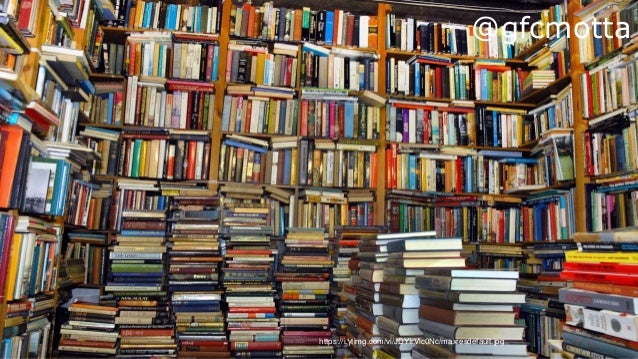
I never thought about the demise of school libraries until this moment when I have to look at their transformation over the years. With technology constantly changing, it is important for school libraries to be prepared for the demands and needs of staff and students. In my point of view, more than a fall, the technological changes have made the libraries advance even if they let go the traditional way in which some of us are accustomed. Laura Wernick author of The School Library is Changing states that "whether we like it or not, libraries are changing" but they have not failed to fulfill their mission of teaching those who come for help. In this dilemma there are people who disagree with the modernism implemented by the school libraries and believe that these new trends for education should no be supported. This is because it replaces teacher librarians, plagiarism is more likely to occur and many other objections considered as threats to the educational ethics.
Subscribe to:
Posts (Atom)